Equipment
Equipment: Pack for Comfort, Access and Security
The right kit is the kit you can reach in the rain, use with cold hands and leave on the bike with an easy mind while you eat lunch.
Luggage: choose for access first
Touring luggage comes in four broad forms. Hard panniers and top boxes lock, shrug off rain and make overnight unloading quick, but they are wide and heavy. Soft panniers and roll-top bags are lighter, more forgiving in a low-speed fall and easier to fit to different bikes, though less secure. A tank bag keeps small essentials in sight. A tail bag or roll on the passenger seat carries soft, light items.
Whatever you choose, pack by frequency of use. Waterproofs, a warm layer, water, documents and the day's snacks belong where you can reach them at the roadside without unstrapping anything. Camping gear and spare clothes can live at the bottom of a pannier. Many riders pack each pannier with matching contents so that a single bag can be carried into a hotel for the night.
Weight and balance
Heavy items low and forward, light items high and behind. That simple rule keeps steering neutral and stops the front wheel feeling light on climbs. Keep left and right panniers within a kilogram or two of each other, and avoid loading a top box with anything dense. Check your owner's manual for the maximum payload and for any luggage speed limit printed on the rack or box; many are rated for lower speeds than riders assume. Adjust tyre pressures and rear preload for the load you actually carry.
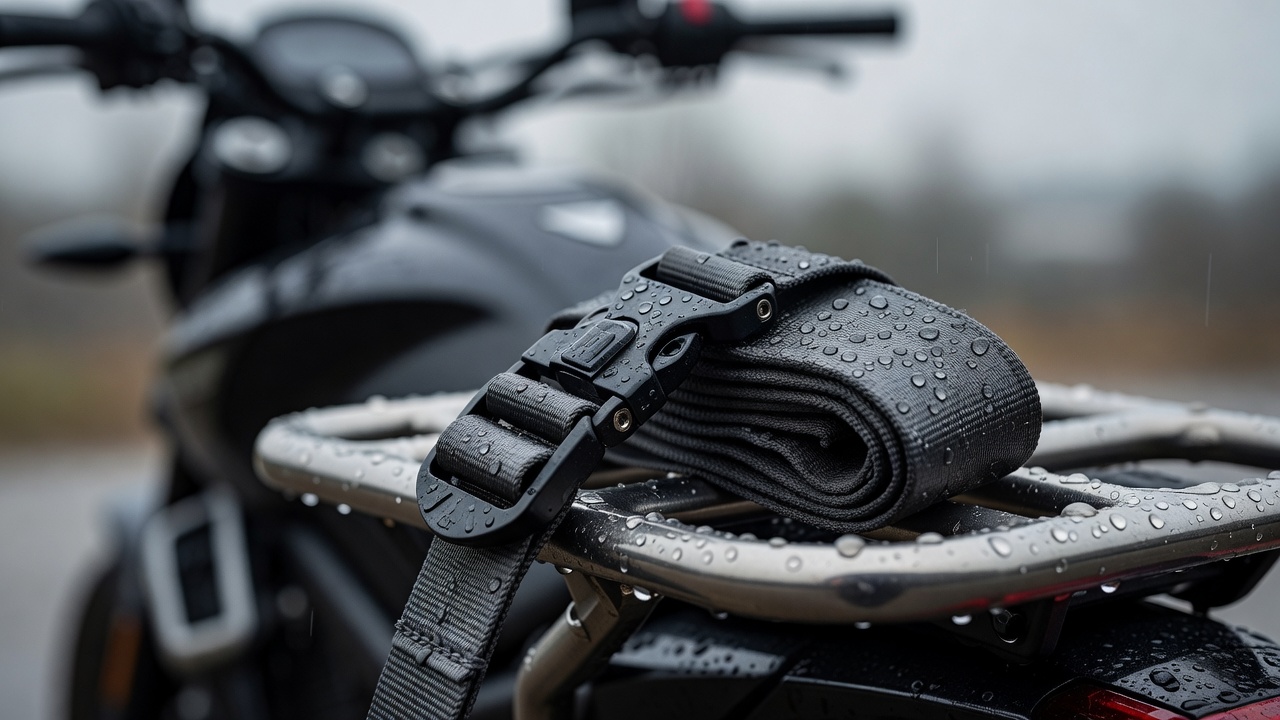
Pack so the rain layer is never more than one buckle away.— Equipment note
Protective standards worth knowing
Certification labels tell you what has been tested. In Europe and many other regions, helmets are approved to ECE 22.06, which added rotational impact and modular-helmet tests over the earlier 22.05. Riding garments are tested to EN 17092, graded from AAA, the highest abrasion and impact class, down to C. Limb armour is tested to EN 1621-1 and back protectors to EN 1621-2, each at Level 1 or Level 2. Gloves are certified to EN 13594 and boots to EN 13634.
For touring, comfort over a long day matters as much as peak protection. A jacket that is too hot in July will be unzipped or left in the pannier, which defeats its purpose. Ventilated outer layers with a removable membrane, or a separate waterproof oversuit, adapt better to changing conditions than a single heavy garment.
| Item | Standard | What to look for |
|---|---|---|
| Helmet | ECE 22.06 | Approval label on the chin strap |
| Jacket and trousers | EN 17092 | Class AAA, AA, A, B or C on the label |
| Limb armour | EN 1621-1 | Level 1 or Level 2 |
| Back protector | EN 1621-2 | Level 2 for lower transmitted force |
| Gloves | EN 13594 | Level 1 or Level 2, KP for knuckle protection |
| Boots | EN 13634 | Numbered performance ratings on the label |
The touring checklist
- Tubeless plug kit or tube repair kit matched to your wheels, plus tyre levers if needed
- Compact electric compressor and a separate pressure gauge
- Small tool roll with the specific sizes your bike uses, tested at home
- Foam earplugs: wind noise at speed causes fatigue as well as hearing damage
- Spare gloves, one thin and one warm, plus a buff or neck warmer
- Water bottle or hydration bladder, and snacks you will actually eat
- Disc lock with a reminder cable, and a cable lock for helmet and jacket
- Basic first aid kit, sun cream, and any personal medication
- Phone charger wired to the bike, plus a power bank for overnight stops
Security without anxiety
Most touring theft is opportunistic. Park where you can see the bike from your table, use the disc lock even for short stops, and take the tank bag with you. At hotels, ask about covered or courtyard parking when you book. A plain cover hides the make of the bike and the luggage on it. Keep a photograph of the frame number and a list of serial numbers for your electronics, stored somewhere other than your phone.